
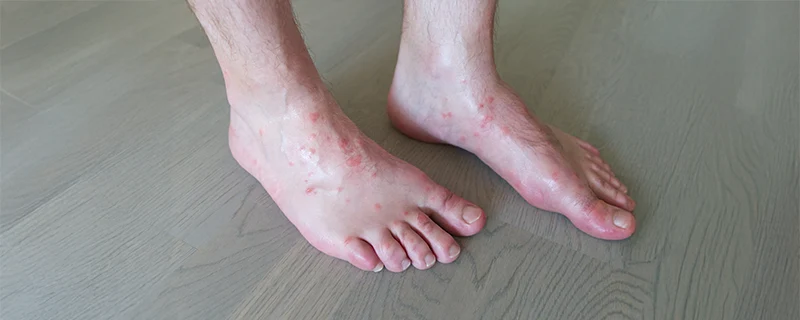
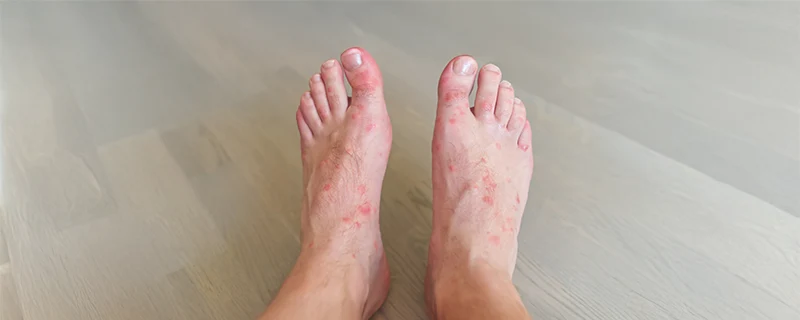
Athlete’s foot is a common fungal infection that affects the skin of the feet, most often between the toes. It develops when fungi grow in warm, moist environments such as sweaty shoes, damp socks, or wet public services. This condition, medically referred to as Tinea Pedis, spreads easily through direct contact and shared areas like locker rooms, gyms, and swimming pools. If left untreated, it may spread to the soles, toenails, or hands, leading to persistent skin irritation and skin damage.
Also Known As
- Tinea Pedis
- Ringworm of the foot
- Moccasin foot
Causes

Fungal growth in moist environments

Walking barefoot in public areas

Excessive sweating

Poor foot hygiene

Tight or non-breathable footwear
Common Symptoms

Types of Athlete’s Foot
There are different types of Fungal foot infections, including interdigital type affecting the space between toes, moccasin type causing dry and scaly soles, and vesicular type marked by fluid-filled blisters. Each type varies in severity and requires targeted treatment for effective healing.
Who It Affects
Who It Affects:
Athletes, individuals with sweaty feet, people using public showers, and those wearing tight or closed footwear are more prone to this condition.
When to see a dermatologist
Consult a dermatologist if symptoms do not improve with basic care, worsen over time, or recur frequently. Early evaluation and right foot fungus treatment help prevent complications.

