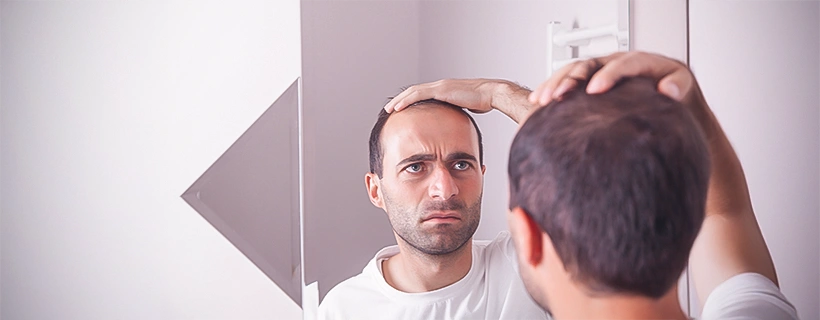
Alopecia refers to hair loss that can affect the scalp or other parts of the body. In mild cases, hair thinning occurs gradually and may be barely noticeable. It is often caused by factors such as stress, hormonal changes, nutritional deficiencies, or genetics. Mild alopecia does not usually lead to complete baldness and may present as small patches or general thinning. Identifying hair loss at an early stage is important, as quick intervention can slow further thinning and encourage hair to grow back. Common approaches include topical treatments, dietary improvements, and lifestyle changes to support healthy hair growth.
Also Known As
Hair loss
Thinning hair
Bald patches
Causes
Genetics and family history
Inherited genes from parents or close relatives can affect hair follicle size and growth cycles, increasing the likelihood of hair thinning or mild alopecia over time.
Stress or lifestyle factors
Hair growth cycles can be disturbed by physical or emotional stress, lack of sleep, poor diet, smoking, and excessive alcohol consumption, which can result in moderate hair loss and gradual thinning.
Hormonal changes
Hormonal fluctuations during puberty, pregnancy, menopause, thyroid imbalances, or contraceptive use can affect hair follicle activity, leading to temporary or persistent mild hair loss.
Nutritional deficiencies
Hair follicles are weakened by improper consumption of protein, iron, zinc, biotin, vitamin D, or other vital minerals, which results in gradual thinning or patchy hair loss.
Autoimmune conditions
Disorders like alopecia areata make the immune system attack hair follicles, causing small bald spots or thinning, usually without redness or irritation in mild cases.
Common symptoms
Small, patchy hair loss areas: Hair can fall in small, round, or irregular patches on the scalp. These spots are often hard to notice and do not cause redness or irritation.
Gradual thinning of hair: Hair density decreases slowly over time, making the scalp more visible. The thinning is typically diffuse and spreads subtly, often without sudden or complete baldness.
Usually, No Pain or Itching: Mild cases rarely cause discomfort, irritation, or itching, making the condition primarily cosmetic in nature.
Scalp remains healthy in mild cases: The scalp usually appears normal with no redness, flaking, itching, or irritation. Hair loss is present, but the skin underneath generally remains healthy.
Who It Affects
Mild alopecia can impact both men and women across all age groups. Individuals with a family history of hair loss, hormonal changes, poor nutrition, chronic stress, or specific medical conditions are more likely to experience gradual thinning or patchy hair loss.
When to see a dermatologist
It’s important to consult a dermatologist if hair loss becomes rapid, spreads across larger areas, or is accompanied by symptoms such as itching, redness, scalp irritation, or pain. Early evaluation allows doctors to identify the cause of hair loss and start treatment promptly, helping prevent further thinning and minimize the risk of permanent hair loss.