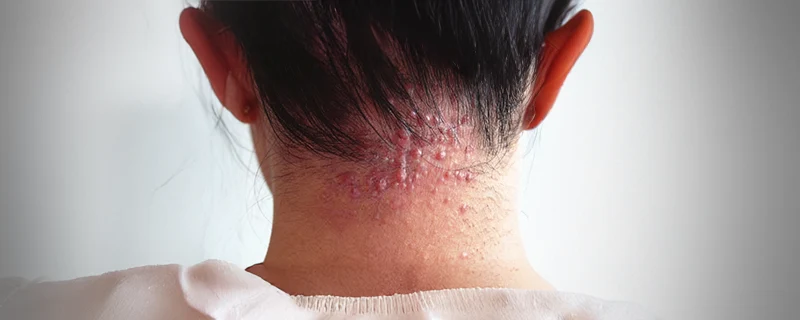
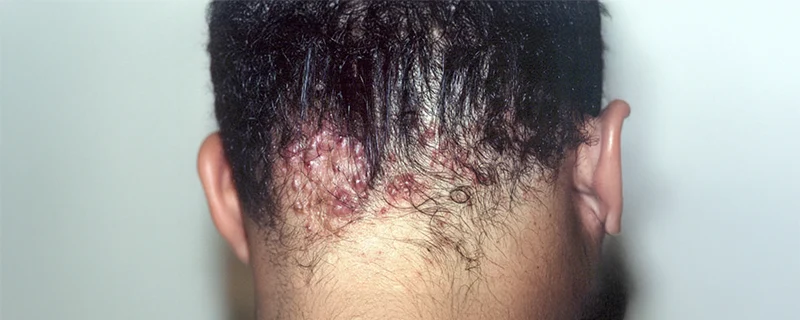
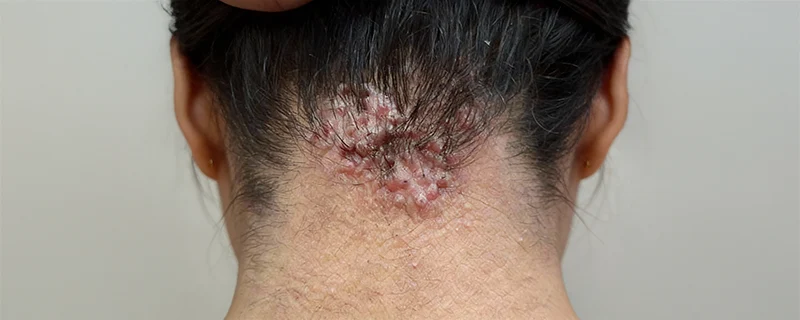
The Acne Keloidalis Nuchae (AKN) is a type of chronic skin condition wherein the hair follicles in the area behind the neck and lower scalp undergo inflammation, followed by redness and irritation.
Small bumps similar to pimples are produced, which over time can lead to raised scar-like areas along with permanent hair loss. It is commonly found in men with curly hair, specifically those of African-American native can be treated.
Treatment methods consist of antibiotics, retinoids, antibacterial cleansers, and corticosteroids. Severe cases may require laser and surgery.
Also Known As
- Folliculitis Nuchae Scleroticans
- Folliculitis Keloidalis Nuchae
- Dermatitis Papillaris Capillitia
- Keloidalis Nuchae
Causes
Repeated friction or irritation
Frequent use of hats, tight collars, or even helmets can irritate the hair follicles at the back of the neck.
Close shaving or short haircuts
Hair, when cut close to the scalp, can result in ingrown hair.
Inflamed or blocked hair follicles
The trapped hair and oil can trigger swelling and infection in follicles.
Thick or curly hair texture
The curly hair type is most likely to bend easily and therefore re-enters the skin, leading to ingrown hair and inflammation.
Moisture from sweat keeps the neck area warm and damp, setting the ideal environment for bacterial growth.
In some cases, the skin and hair traits when inherited, the individual is more prone to follicle irritation and scarring.
When bacteria enter the damaged hair follicles, they further trigger inflammation, leading to painful, pus-filled neck scarring bumps.
Common Symptoms
Itchy, red bumps: Inflamed, itchy small bumps on the back of the neck or scalp. These look like razor bumps or acne.
Painful, inflamed lesions: As the condition worsens, these bumps become sore to the touch as they become tender and inflamed.
Scarring and thickened skin: As part of the healing process, the bumps can become thick and scar the area permanently.
Hair loss: Also referred to as Alopecia, the hair in the scarred area can stop growing, leading to hair loss and patchy bald spots.
Pus or fluid drainage: The small bumps can also grow into painful, swollen lumps, followed by pus or fluid discharge with a foul smell.
Types of Acne Keloidalis Nuchae
There are several types of Acne Keloidalis Nuchae (AKN), which are as follows:
Papular: These refer to the early small bumps (papules) that appear at the back of your neck or lower scalp.
Nodular: When the small or papular bumps grow in size and merge, it is referred to as Nodular. These are more visible, tender, and painful to touch.
Plaque: In this case, the bumps further join together to create a large flat or thick lump of skin that eventually stabilizes as scarring that gets difficult to treat.
Tumorous mass type: This is when the affected area or bumps formed, become raised and stick out more than typical plaque scars, which require surgery.
Who It Affects
Acne Keloidalis Nuchae (AKN) primarily affects young men, especially those with darker skin, such as African, Afro-Caribbean, Hispanic, or Asian native. It usually begins around puberty, at the age of 14, and can be found in men up to 25 years old. This skin disorder is less common in those with lighter skin and older men.
When to see a dermatologist
If the bumps on the back of your neck are painful, itchy, spreading, or forming scars, it is advisable to consult a dermatologist. In the case of pus drainage, increasing hair loss, or even bleeding, simple self-care may not be helpful as such. Timely treatment is crucial to prevent permanent scarring.