
Allergic contact dermatitis is usually caused when the skin comes in contact with a triggering substance or ingredient, which reacts with an allergic skin reaction.
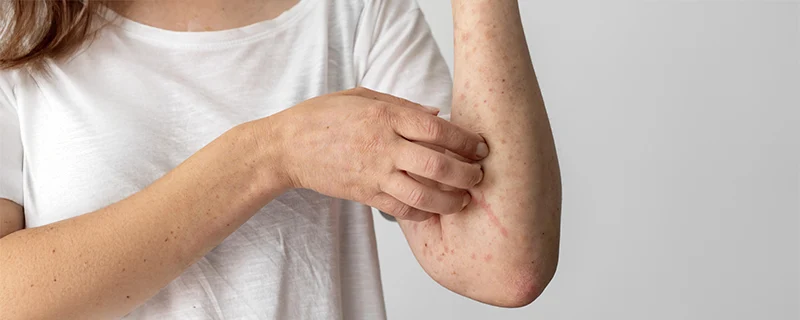
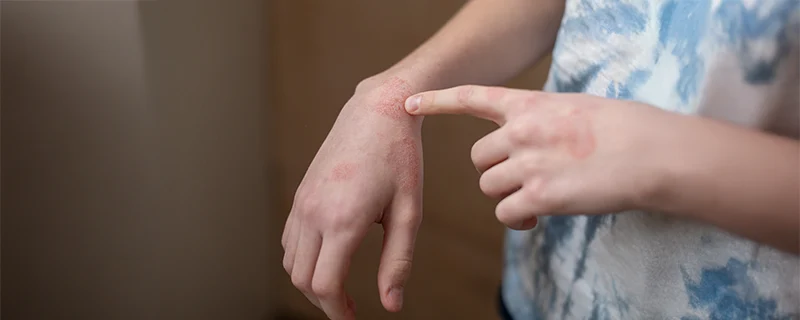
While it can affect anyone, this type of skin condition is commonly seen in individuals with sensitive or reactive skin. Visible signs of allergic contact dermatitis range from dryness, irritation, to itching and redness, and even blisters.
Primary treatment involves immediately stopping the usage of the product to help heal the skin naturally. Other measures include switching to gentle, fragrance-free skincare items. If the allergic reaction escalates in spite of self-care, it is recommended to seek expert treatment at the earliest.
Also Known As
- Contact hypersensitivity
- contact eczema
- contact allergy
Causes

Chemicals in skincare products

Latex and rubber products

Plants and natural allergens
Medications and antibiotic creams

Metals and jewellery
Common Symptoms

Who It Affects
Allergic contact dermatitis can affect people of any age, including infants, children, and the elderly. However, the most common cases are observed in those with sensitive skin or a medical history of allergies.
Furthermore, individuals who are frequently exposed to allergens, such as metals, chemical products, or contaminated objects. People with existing skin conditions may also be prone to allergic contact dermatitis due to their poor skin barrier.
Types of Contact Dermatitis
Generally, Contact Dermatitis is of two types, Allergic Contact Dermatitis and Irritant Contact Dermatitis.
When to see a dermatologist
It is recommended to consult a dermatologist if your skin condition does not improve upon stopping the usage of the specific product that triggered the reaction. If there is severe itching, swelling, rashes, or a burning sensation, professional allergic contact dermatitis treatment is crucial. Early diagnosis can help identify the exact cause and access the right treatment for lasting recovery.

